
Multiple Word Translator
The Multiple Word Translator in Naming Toolbox helps you translate a word into many languages at once. It is a useful creativity tool when you want to explore international naming directions, discover foreign-language inspiration, or test how a concept changes across different linguistic contexts.
This tool is especially helpful when you start with one core word and want to see how it appears in other languages. These translations can become direct inspiration, thematic references, or starting points for further naming work.
For a practical first step, open Multiple Word Translator and run the tool with a real name idea, keyword, or topic from your project.
What the Tool Does
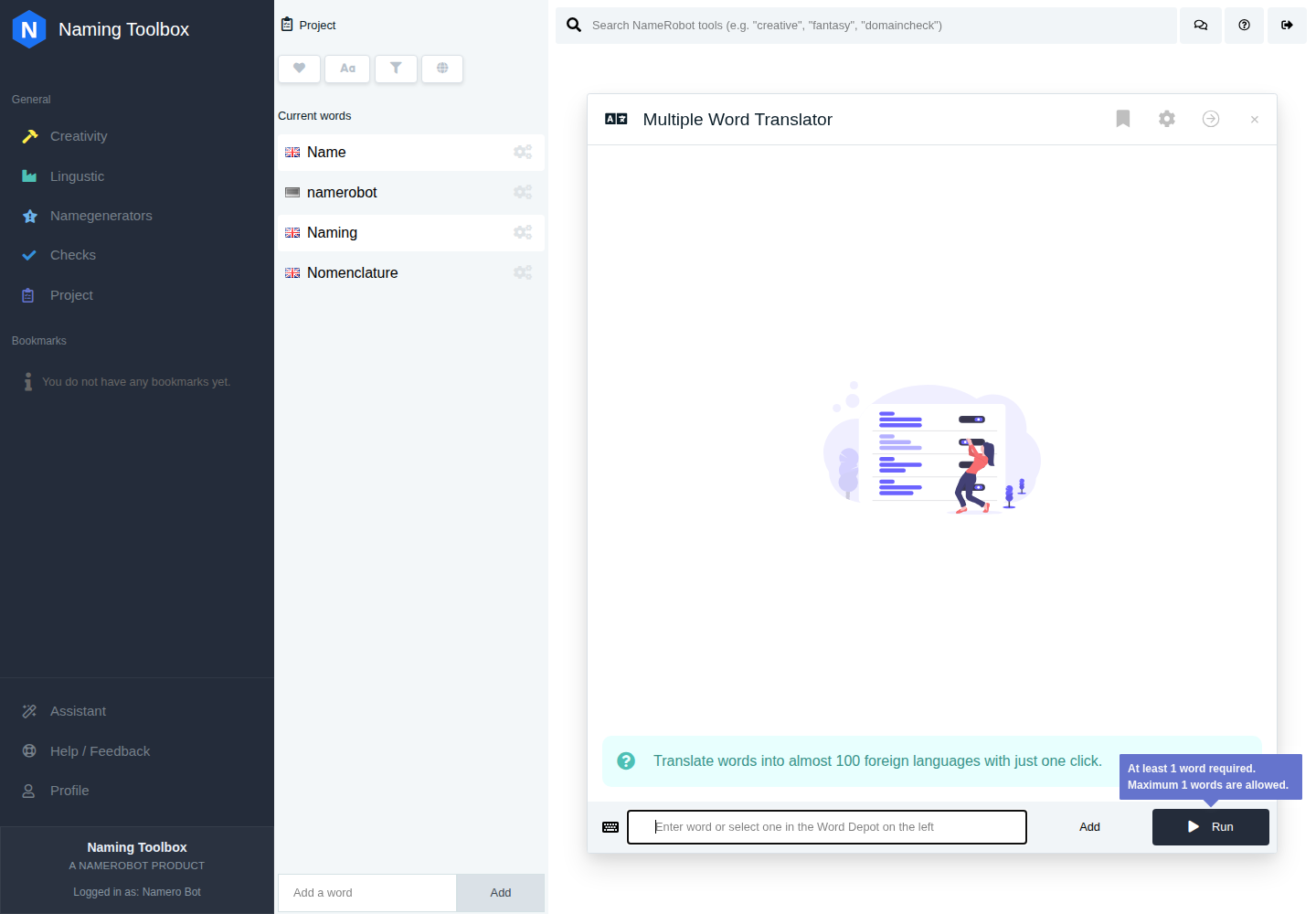
Multiple Word Translator takes one word as input and returns translations in multiple selected languages. Instead of translating into only one target language, the tool allows you to generate a broader multilingual result set in a single step.
This makes it useful for international naming exploration, cross-language idea generation, and discovering words that may feel more distinctive or more suitable in another language.
How to Use Multiple Word Translator
You can enter a word directly or select one from your project. The tool then detects the input language context and translates the word into the target languages selected in the settings.
Only one word is used at a time, which keeps the results focused and makes the translated output easier to compare.
Settings
The main setting in Multiple Word Translator is the list of target languages.
Translate to the following languages lets you choose which languages should be included in the translation results. The tool supports a large number of languages, and several common languages are preselected by default.
This setting is important because it defines the scope of the output. A smaller language selection gives you a tighter, more focused result list, while a broader selection can help you explore a wider range of international naming possibilities.
The tool also allows you to deselect all languages quickly and then choose only the ones that are relevant for your project.
Language Handling
The tool works with the language of the input word and translates it into the selected target languages. If the translation in a target language would be identical to the original word, that result is skipped.
This helps keep the result list more useful and avoids unnecessary duplicates.
When to Use It
Multiple Word Translator is useful when you want to explore global naming directions, discover alternative word forms in other languages, or test whether a concept becomes more interesting outside its original language. It can also help when you want to build multilingual input for other creativity tools or naming workflows.
This is especially relevant for international brands, products, digital services, or any naming project that may need cross-border appeal.
How to Work with the Results
The translated words can be used as direct inspiration, as source material for later combinations, or as a way to uncover new thematic directions. Some translations may already feel suitable as names, while others may serve as stepping stones for further exploration in other tools.
A practical workflow is to translate a promising concept word into several target languages, save the most interesting results to your project, and continue refining them with other tools in Naming Toolbox.