
Hidden Words in Names
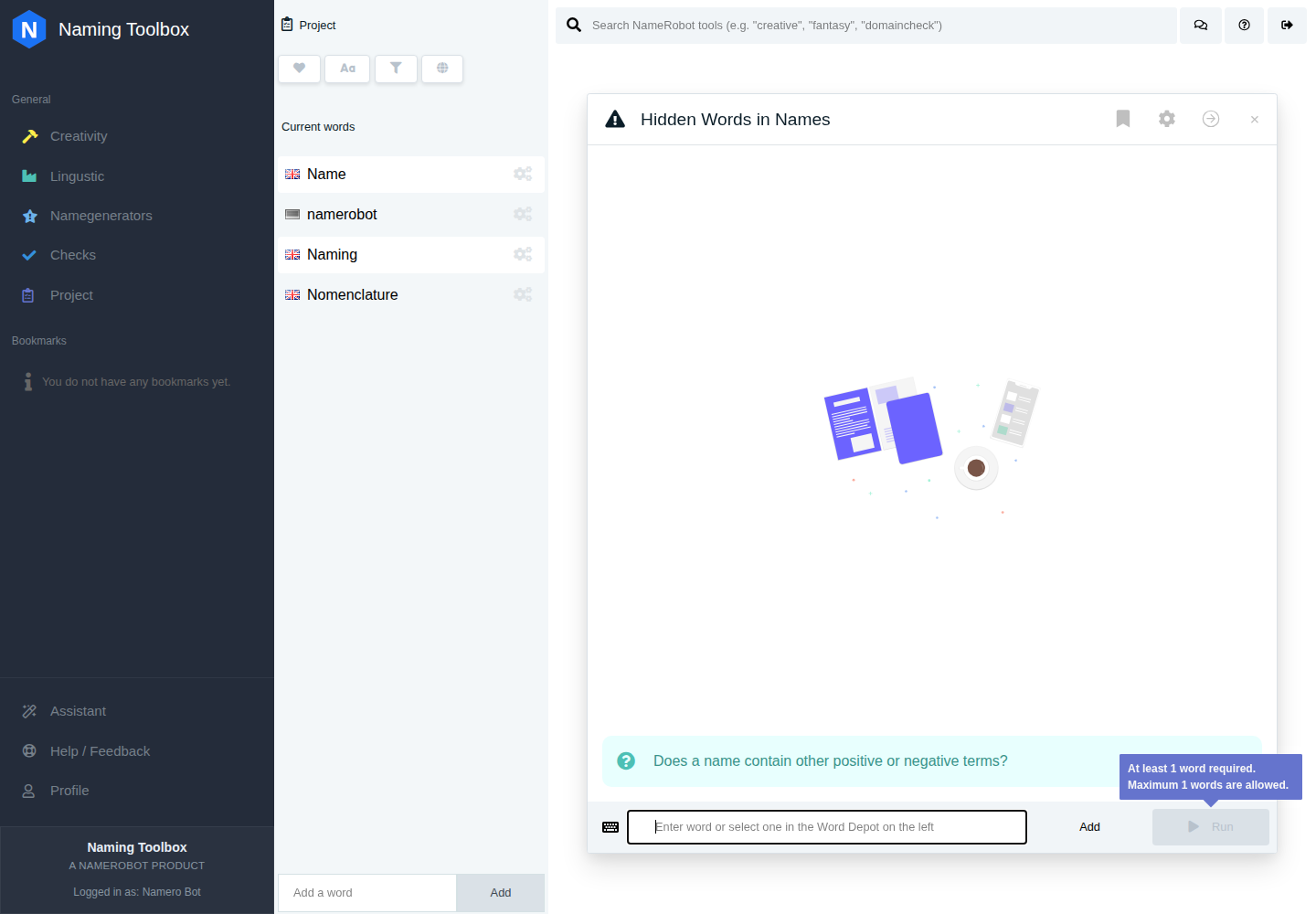
The Hidden Words in Names tool helps you detect whether a name contains other words inside it that may create unwanted meanings, awkward associations, or linguistic surprises.
This is useful because a name can look and sound strong at first, but still contain fragments that users notice once they read it more closely. Those fragments may be harmless, positive, distracting, or problematic depending on the language and context.
Hidden Words in Names helps you review this risk earlier, especially when you are evaluating names for international use or for audiences that may read a word in more than one way.
You can read the workflow first or launch Hidden Words in Names in Naming Toolbox and review the check results as you go.
What the Tool Does
The tool scans a name for embedded word fragments in selected languages. It can identify ordinary words as well as problematic or sensitive terms, depending on the available language data.
It can also check the name in reverse, which helps surface fragments that are not obvious at first glance but still become visible when people mentally parse a name in unusual ways.
This makes the tool useful for catching avoidable problems before a name is finalized.
How to Use Hidden Words in Names
Enter the name you want to review and choose the languages that should be checked.
You can then adjust the minimum fragment length to control how broad or narrow the scan should be. Shorter fragment lengths reveal more possible matches, while longer settings focus on more substantial word parts.
After running the tool, review the detected fragments carefully. Not every embedded word is a problem. The important question is whether a fragment creates a confusing, distracting, or negative effect in the context where the name will be used.
Settings
Languages
The main setting is the language selection. The tool can check multiple languages so you can see whether the same name creates different associations depending on the audience.
This is especially important for international naming, multilingual brands, or names that will be read by users in different markets.
Minimum Word Length
You can define the minimum length of the hidden words that should be considered.
A lower setting produces more matches, including shorter fragments that may be less important. A higher setting reduces noise and focuses on larger word parts that are more likely to be meaningful.
This setting is useful when you want to balance sensitivity and relevance.
Reverse Checking
The tool can also inspect reversed letter sequences. This helps surface hidden fragments that may not appear in the forward reading alone.
In many cases these reverse findings are less important than normal matches, but they can still be useful when reviewing names carefully for unintended effects.
What the Results Mean
The results show detected word fragments inside the entered name.
Some results may simply reveal neutral or descriptive words. Others may point to negative, awkward, or sensitive terms that deserve closer attention.
A result is therefore not automatically good or bad. It is a prompt to evaluate whether that fragment matters for your audience, market, language context, or brand tone.
When to Use It
Use Hidden Words in Names when a name is already under serious consideration and you want to reduce the risk of unintended meanings.
This is especially useful for brand names, product names, startup names, app names, and international names that may be read by users in multiple languages.
It is also a valuable final review step before committing to a shortlist or launch candidate.
How to Work with the Results
Start by reviewing whether the detected fragments are actually noticeable and meaningful in your real audience context.
A stronger result profile usually means the name does not contain distracting or problematic hidden terms in the languages you care about. A weaker profile means the name includes fragments that may create confusion, negative associations, or avoidable interpretation problems.
If an unwanted fragment appears in an important market language, it is often better to adjust the name early rather than explain the issue later.
Notes
Not every detected fragment will matter in practice. Some results are only technical matches, while others may be highly relevant depending on cultural and linguistic context.
This tool works best as a screening step. It helps you notice possible issues early so you can decide whether a name still feels safe, clear, and usable.